Infant formula water choices and fluoride exposure risks
You may be standing at the kitchen sink with a tin of powdered formula in one hand and a question in the other: is the tap water suitable for mixing your baby’s next bottle?
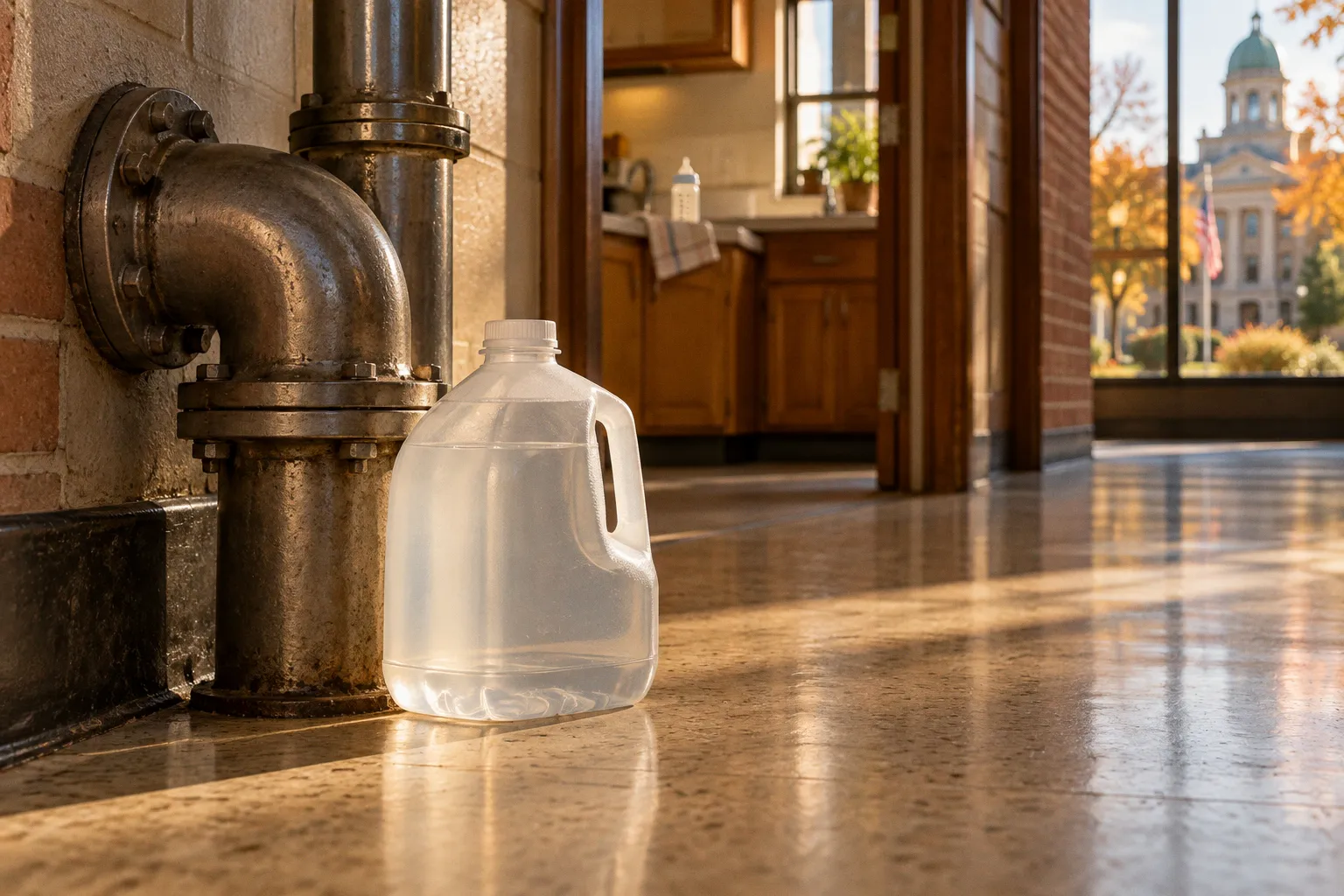
The answer depends on the fluoride concentration in your water, how much formula your infant drinks, and what other sources of fluoride are part of their day.
For most families, this is a question about managing exposure, not responding to an emergency. The numbers can help us make a calm, practical choice. U.S. community water systems that fluoridate aim for 0.7 milligrams of fluoride per liter. That level is useful context, but it does not tell us exactly how much fluoride a particular infant consumes, or establish that every baby drinking formula made with that water faces a neurodevelopmental effect.
Why the water in formula matters
Breast milk contains very little fluoride, approximately 0.02 parts per million. Powdered formula is different: the water used to prepare it contributes fluoride to the finished feed. For a baby who drinks formula regularly, that water can become a substantial source of early-life fluoride exposure.
The formula itself also matters. Since 1979, U.S. manufacturers have voluntarily lowered fluoride concentrations in ready-to-feed and concentrate products to less than 0.3 ppm. Ready-to-feed formula is made with water already incorporated, so you don’t add tap water at home. Concentrate needs to be diluted according to the package directions, and powdered formula needs water added as directed.
That distinction makes the label a useful first stop. If you use ready-to-feed formula, you avoid the specific question of fluoride in household water used for mixing. If you use powder or concentrate, the water source becomes part of the exposure picture. That does not mean one form is automatically best for every family; feeding plans, medical advice, cost, availability, and safe preparation all matter.
With powdered formula, the water is part of the recipe, so its fluoride level belongs in the conversation.
Fluoride is associated with reduced tooth decay, and community water fluoridation is intended to support dental health. At the same time, babies’ intake is small in absolute terms, and their exposure can vary with body weight, feeding volume, water concentration, and other sources. The practical task is to understand those pieces without treating a single number as a diagnosis.
Put daily intake in context
The Institute of Medicine set tolerable upper intake levels for fluoride at 0.7 milligrams per day for infants from birth through 6 months, and 0.9 milligrams per day for infants 7 through 12 months. These are upper limits for total daily intake, not recommended targets and not a line that predicts harm for an individual child.
To estimate the fluoride contributed by mixing water, start with the concentration shown for the water and the volume used in a day. At 0.7 mg/L, each liter of water contains 0.7 milligrams of fluoride. The amount in a bottle depends on how much water the prepared formula contains; daily intake from this source depends on the total volume used. Formula and other foods or drinks may contribute additional fluoride.
For example, if a baby’s prepared feeds use a total of one liter of water in a day at 0.7 mg/L, that water contributes 0.7 mg of fluoride before accounting for any other sources. This arithmetic is a rough exposure estimate, not a clinical assessment. A baby may drink less than a liter, and intake from formula itself or other sources may differ.
The calculation has an important limitation: water concentration is only one part of total intake. A baby’s age and weight, how much formula they take, whether they also receive water or foods, and the fluoride content of those sources all affect the estimate. If your baby has a medical condition or a feeding plan supervised by a clinician, bring the water question to that clinician rather than changing the preparation routine on your own.
A useful way to keep the numbers straight:
- 0.7 mg/L is the U.S. Public Health Service and CDC target concentration for community drinking water.
- 0.7 mg/day is the Institute of Medicine’s tolerable upper intake level for infants aged 0–6 months.
- 0.9 mg/day is the upper intake level for infants aged 7–12 months.
The first figure describes a concentration in water. The other two describe total daily intake. They cannot be compared as if they were the same measurement: to move from concentration to intake, we need the volume consumed, and to estimate total intake we need to consider other sources too.
What 0.7 mg/L means when you prepare a bottle
If your home uses community water at the U.S. target of 0.7 mg/L, powdered formula prepared with it will contain fluoride from that water. For a formula-fed infant, especially one taking larger volumes, the cumulative intake can approach or exceed the tolerable upper intake level. Research and guidance identify powdered formula mixed with fluoridated water as a potential contributor to higher early-life exposure and a greater likelihood of dental fluorosis.
Dental fluorosis develops while teeth are forming and can appear as changes in enamel. Its severity varies. The possibility of fluorosis is one reason families may discuss lower-fluoride water for formula preparation with a pediatric dentist or other clinician. Fluorosis is not the same outcome as a neurodevelopmental effect, and the evidence and thresholds relevant to each question should not be collapsed into one general claim about fluoride.
If you are unsure what comes from your tap, check the water provider’s annual report or ask the provider directly for the fluoride concentration. The community target is not proof that every household has exactly that level: local water conditions and the supply source matter. If your home relies on a private well, you may need a water test to learn the concentration rather than assuming it matches the municipal target.
The key practical distinction is that water above 0.5 ppm used to reconstitute powdered formula significantly increases the likelihood that an infant could exceed daily tolerable upper intake levels. That finding flags a reason to look more closely at total exposure. It does not mean every infant using such water will exceed a limit, or that an exceedance on its own establishes a clinical injury.
Bottled water and filtration: what changes the number
If you’re considering bottled water, the word bottled alone doesn’t tell you its fluoride content. Mineral content varies, so look for fluoride information on the label or ask the manufacturer. The American Dental Association advises parents concerned about dental fluorosis that distilled, purified, demineralized, or low-fluoride bottled water can be used to mix powdered or concentrate formula, following the formula instructions and safe preparation guidance.
“Purified” and “distilled” describe different processing approaches, and labels may not provide a clear fluoride figure. If you need to limit fluoride for formula preparation, choose water with a stated low fluoride concentration rather than relying on a product category name. Use water that is safe for infant feeding, and follow any advice from your child’s clinician, particularly if the baby was born prematurely or has special health needs.
Household filtration also varies. A filter’s ability to reduce fluoride depends on its technology and the product’s documented performance. Many common pitcher and faucet filters are designed for other contaminants and should not be assumed to remove fluoride. Before relying on a filter, look for explicit fluoride-reduction claims and supporting certification or performance data for that exact model; replace cartridges on schedule, since a filter that is overdue for replacement may not perform as intended.
| Water choice | What to know for formula preparation |
|---|---|
| Community tap water | Check the local fluoride concentration; the U.S. target is 0.7 mg/L. |
| Distilled or demineralized water | These are options the ADA identifies for parents concerned about dental fluorosis. Follow formula directions and safe-water guidance. |
| Bottled water | Fluoride content varies; look for a stated concentration or ask the manufacturer. |
| Filtered tap water | Confirm that the specific filter is designed and documented to reduce fluoride; don’t infer this from the word “filter.” |
| Ready-to-feed formula | No water is added at home, avoiding fluoride exposure from water used to reconstitute powder or concentrate. |
One thing we should keep separate is water choice and formula safety. Don’t dilute or concentrate formula beyond its instructions to change fluoride exposure; that can alter the nutrition and hydration the baby receives. If you choose a different water source, prepare the feed exactly as directed and follow local guidance on safe water for infants.
What the neurodevelopment research does—and does not—say
Concern about neurotoxicity is understandable, especially when parents are trying to make decisions during early development. The National Toxicology Program monograph concluded with moderate confidence that drinking-water fluoride levels above 1.5 mg/L are associated with lower IQ in children. That is an important finding, but its benchmark is above the U.S. community fluoridation target of 0.7 mg/L.
The monograph’s conclusion does not establish that standard optimally fluoridated municipal water causes neurodevelopmental harm in every formula-fed infant. Nor does the benchmark tell us the precise exposure at which formula-borne fluoride, by itself, would produce a measurable clinical effect in an individual baby. The exact threshold for early postnatal formula exposure remains under study.
That uncertainty is worth holding carefully. It is not a reason to dismiss research, and it is not a reason to frighten families with claims the evidence does not support. The research on fluoride and child cognition concerns exposure levels and study populations that must be considered in context. A concentration measured in drinking water is not automatically the same as an infant’s total daily dose, and an association in a population does not diagnose a child.
For families, a sensible route is to establish what water the baby actually receives, then decide whether a lower-fluoride option makes sense for your circumstances. If your local water is near the 0.7 mg/L target and your baby drinks a large volume of powdered formula, you may want to discuss distilled, demineralized, or verified low-fluoride water with your pediatric dentist or clinician, especially if avoiding enamel fluorosis is a priority. If the water is above 1.5 mg/L, that level falls within the range identified in the NTP conclusion, so it is reasonable to seek prompt, individualized advice on an alternative water source.
A manageable plan for the next bottle
You don’t need to solve every question about fluoride science before feeding your baby. Start with the details that can be checked:
1. Identify the formula type. Ready-to-feed, concentrate, and powder involve different amounts of added water.
2. Find the fluoride concentration in your tap water. Use a utility report, contact the provider, or arrange testing if you rely on a private well.
3. If you use bottled water, look for a fluoride concentration rather than assuming all bottled water is low in fluoride.
4. If you use a filter, verify that the specific model is designed to reduce fluoride and is being maintained as directed.
5. Keep formula preparation exactly as the label instructs. Ask your pediatric clinician or dentist to help weigh exposure concerns against your baby’s feeding needs.
The numbers give us a map, not a verdict. At the U.S. community target of 0.7 mg/L, formula water can contribute meaningfully to an infant’s fluoride intake, and families concerned about fluorosis have lower-fluoride preparation options. The neurodevelopment evidence deserves attention, while its limits matter too. With your water source identified and a clinician available for the questions specific to your baby, you can make the next bottle with more confidence and less guesswork.