Community Advocacy Against Infant Water Fluoridation in Sydney
Anti-fluoridation advocacy in Sydney is led by community groups questioning mandatory fluoridation ethics and potential health risks, particularly for infants.
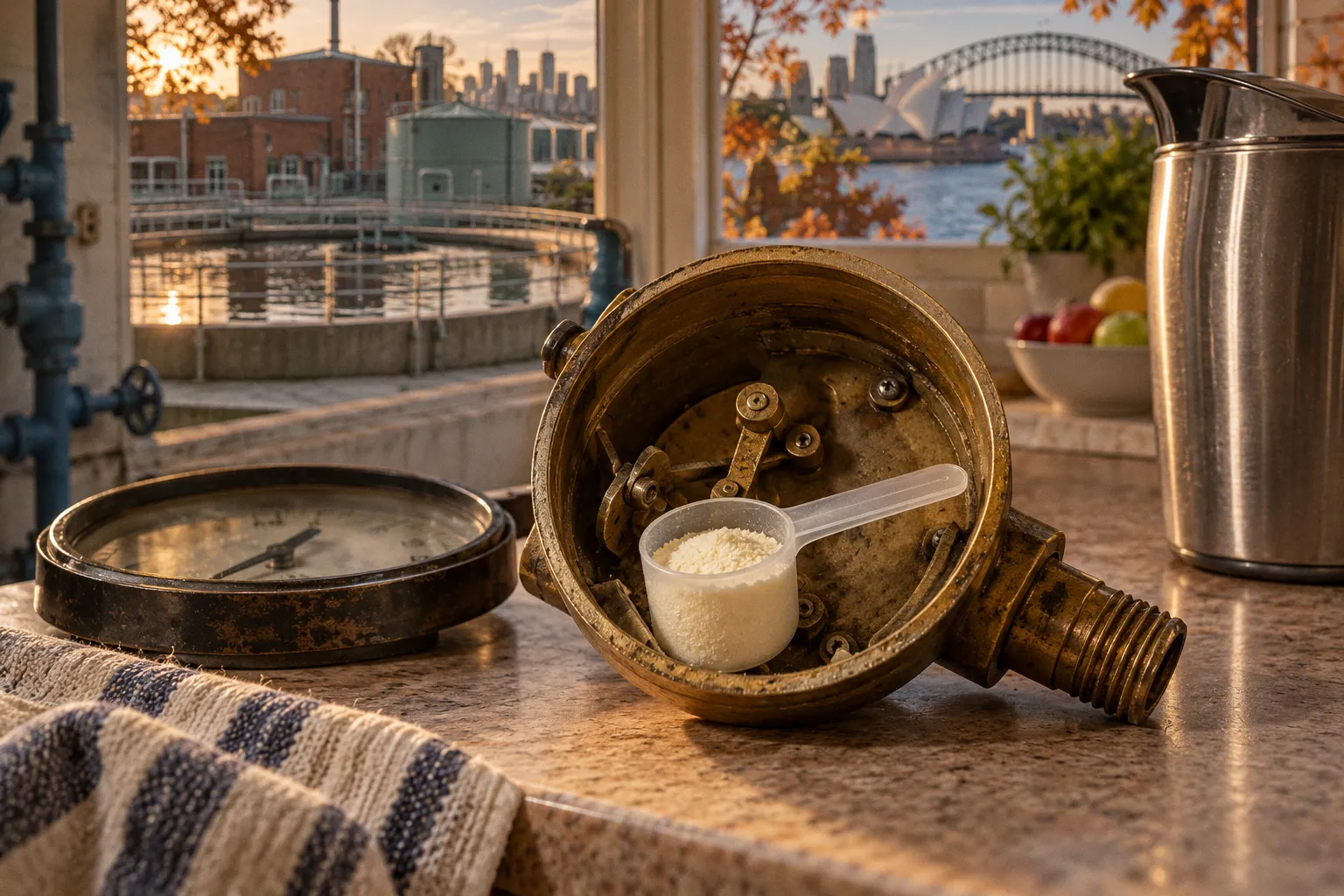
While public water supplies remain fluoridated under state legislation, families seeking fluoride-free drinking water rely on advanced home filtration systems such as reverse osmosis.
| Governing Legislation | NSW Fluoridation of Public Water Supplies Act 1957 |
| Sydney Fluoridation Began | 1968 |
| NSW Population Covered | Approximately 96% |
| Target Fluoride Range | 0.6 to 1.1 mg/L (ADWG) |
| Maximum Guideline Limit | 1.5 mg/L (Sydney Water) |
| Tooth Decay Reduction | 26% to 44% in children (NHMRC) |
| Reverse Osmosis Removal | 90% to 97% efficiency |
| Primary Pick-Up Hubs | Sydney Airport (SYD) & City pick-up points |
Sydney introduced municipal water fluoridation in 1968, and today roughly 96% of New South Wales residents consume fluoridated tap water. The policy is firmly supported by the Australian Dental Association (ADA NSW) and the National Health and Medical Research Council (NHMRC), highlighting a 26% to 44% reduction in childhood tooth decay. Nevertheless, community campaign groups like Fluoride Free Australia maintain an active presence, arguing that public fluoridation constitutes non-consensual medication and raising concerns regarding fluoride ingestion in early infancy. Because municipal supplies adhere strictly to target levels between 0.6 and 1.1 mg/L, local anti-fluoridation efforts concentrate on public awareness, council deputations, and domestic filtration strategies. This guide provides an objective overview of the advocacy landscape, infant formula guidelines, effective filtration methods, and practical logistics for families navigating Sydney and regional New South Wales.
L'essentiel: Fluoridation Rules, Advocacy, and Infant Safety
Municipal water fluoridation in Sydney operates under the NSW Fluoridation of Public Water Supplies Act 1957. Sydney Water adheres to the Australian Drinking Water Guidelines (ADWG), dosing tap water to a target range of 0.6 to 1.1 mg/L, below the maximum health-based limit of 1.5 mg/L.
Community advocacy organizations, including Fluoride Free Australia, actively contest this framework. Their core arguments focus on bodily autonomy, the inability to regulate individual dose, and concerns regarding neurological and systemic toxicity, particularly for formula-fed infants.
Conversely, major health institutions provide unequivocal support for fluoridation:
- ADA NSW & NHMRC: Document a 26% to 44% decline in childhood caries attributed to water fluoridation.
- ARCPOH & ADA Victorian Branch: Confirm that reconstituting powdered infant formula with fluoridated tap water (0.6–1.1 ppm) is safe and carries no significant risk of dental fluorosis.
- Regulatory Reality: Fluoridation has not been banned or removed from metropolitan Sydney tap water, leaving concerned parents responsible for implementing private filtration solutions.
Filtration Costs, Equipment Choices, and Advance Planning
A recurring challenge for residents and visiting families aligned with anti-fluoridation advocacy is choosing effective water treatment. Standard activated carbon pitcher filters and refrigerator filters do not remove dissolved fluoride minerals.
Effective fluoride reduction requires specialized home filtration units:
| Filtration Technology | Fluoride Removal Efficiency | Practical Considerations |
|---|---|---|
| Reverse Osmosis (RO) | 90% to 97% | Requires under-sink plumbing; produces wastewater; highest overall purification |
| Activated Alumina | 80% to 95% | Requires specific flow control; medium footprint; cartridge replacement needed |
| Standard Carbon / Pitcher | 0% | Ineffective for fluoride removal; removes chlorine and taste compounds only |
For families traveling through Sydney, purchasing bottled spring water tested for low mineral content or renting accommodations with pre-installed reverse osmosis systems requires advance planning. When arranging family travel logistics, vehicle and equipment reservations should similarly be secured early to avoid peak-period surcharges.
Car Rental Pick-Up Points: Sydney Airport (SYD) and Downtown Hubs
Sydney serves as Australia's primary international gateway and a central car rental destination. Families traveling with infants often prefer independent vehicle hire to manage nursery supplies, portable reverse osmosis vessels, and baby gear.
Key pick-up logistics include:
- Sydney Airport (SYD): Terminal counters are located directly within the International (T1) and Domestic (T2/T3) arrival halls, offering direct departures onto airport connector motorways.
- City Center Branches: Downtown depots situated along William Street, Pitt Street, and near Central Station provide flexible alternatives for travelers staying in central accommodation.
- Urban Driving Conditions: Navigating central Sydney involves an extensive electronic toll network (e-Tag required) and heavily congested arterial roads during morning and evening rush hours. Child restraint seats are mandatory across New South Wales and can be rented alongside your vehicle.
Driving Advice and Regional Family Excursions from Sydney
Venturing outside the metropolitan area allows families to explore New South Wales while maintaining personal routines. Because regional town supplies are also largely fluoridated under state-wide health policies (96% coverage across NSW), travelers adhering to a fluoride-free regimen should transport sufficient filtered water for infant formula.
- Highway Navigation: State motorways (such as the M1 heading north and M4/M31 heading west and south) are well-serviced with rest areas, though carrying adequate nursery water is advised.
- Local Water Testing: Regional councils publish regular water quality reports. While Yass was the first NSW town to fluoridate in 1956, coverage across the state is comprehensive.
- Packing Essentials: Always carry sterile bottles, pre-measured formula powder, and certified reverse osmosis or distilled water containers suitable for daily baby care.
Where to go by car
| Destination | Distance | Time | Tolls (est.) | Why go |
|---|---|---|---|---|
| Blue Mountains (Katoomba) | ~100 km | ~1 h 30 min | — | Dramatic sandstone escarpments, historic walking tracks, and cooler alpine air. |
| Royal National Park | ~40 km | ~0 h 50 min | — | Scenic coastal drives, family picnic grounds, and pristine littoral rainforests. |
| Southern Highlands (Bowral) | ~120 km | ~1 h 30 min | — | Heritage country towns, rolling rural scenery, and cool-climate botanical gardens. |
| Central Coast (Terrigal) | ~90 km | ~1 h 20 min | — | Protected family beaches, oceanfront dining, and tranquil coastal walking trails. |
| Hunter Valley (Pokolbin) | ~160 km | ~2 h 15 min | — | Sprawling countryside retreats, regional produce tasting, and open farm visits. |
Tolls: rates vary by country and route segment — check current pricing before you go.