Home water filtration: hidden costs of fluoride removal
At the grocery store, a pitcher with a familiar filter can look like the simplest answer to concerns about fluoride in water used for infant formula.
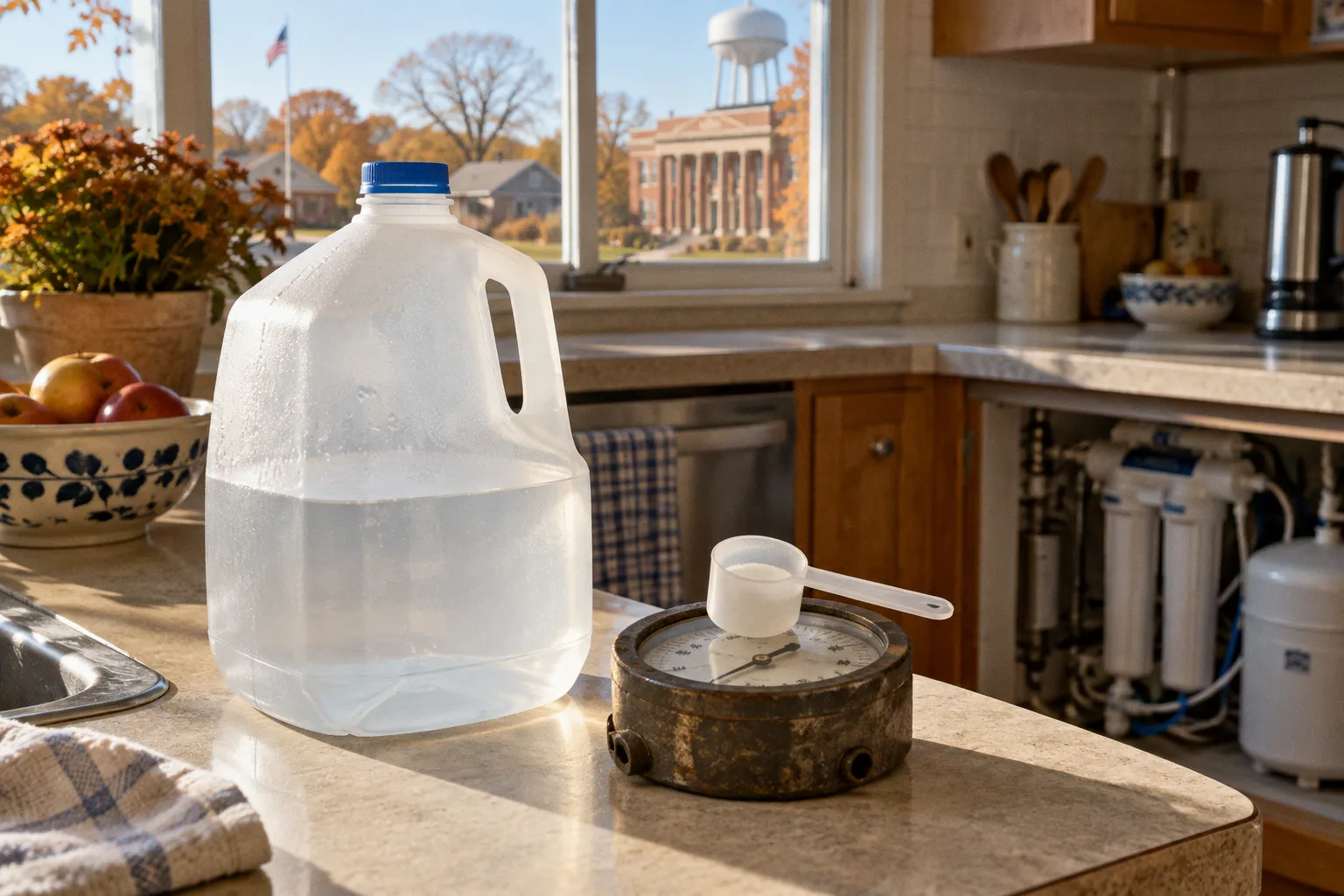
The catch is that ordinary carbon filters, including many pitcher and faucet-mounted models, do not reduce fluoride. A low purchase price can buy reassurance without changing the water’s fluoride level.
For families comparing home water filtration systems for fluoride removal, the useful question is what the system can remove, what it sends down the drain, and what it will cost to keep working. Reverse osmosis and activated alumina can reduce fluoride, but they work differently and bring different upkeep. Neither choice is a set-it-and-forget-it fix, and neither tells us by itself what is in the water at the tap.
Why familiar pitchers may not remove fluoride
Most everyday filters use activated carbon to improve taste and reduce certain contaminants. That can be useful for its intended purpose, but fluoride is not among the substances standard carbon filters reliably remove. A pitcher’s branding, filter-life indicator, or broad claim about “cleaner” water cannot substitute for a stated fluoride-reduction capability.
This distinction matters when we are choosing water for formula. If a product does not specifically identify fluoride reduction, assume the filter has not been shown to do that job. Boiling is not a workaround: as water evaporates, the fluoride left behind becomes more concentrated.
A practical first step is to find out what water your household is starting with. Municipal water reports may provide a fluoride figure, though a report describes the supply and does not necessarily capture every change between treatment and your kitchen tap. If you use a private well, or want a measurement from the water you actually plan to use, arrange a test through a qualified laboratory and ask what sampling method it requires. After installing a fluoride-reduction system, testing the treated water can help confirm the result; follow the laboratory’s collection instructions and the device maker’s replacement schedule.
That gives us a more grounded way to compare options: the starting level, the treated-water result, and the ongoing work required to maintain it.
Reverse osmosis: strong reduction, plus water down the drain
Under-sink reverse osmosis (RO) is a common point-of-use option. The process pushes water through a membrane that can remove fluoride along with dissolved minerals. Reported fluoride-removal efficiency for RO systems is roughly 90% to 99%, but the actual result depends on the system, its condition, and the water going into it. A percentage is not a guarantee of a particular final concentration.
RO also produces wastewater. Typical residential systems send about two to five liters of reject water down the drain for each liter of purified water made. Older or less efficient configurations can use considerably more. Modern models may perform better; the US EPA WaterSense program sets a recovery-ratio ceiling of 2.3:1 for qualifying systems. Check the tested recovery information for the specific model rather than assuming all RO units use water at the same rate.
For households that use treated water mainly for drinking and preparing formula, a point-of-use unit can avoid treating water for every tap in the home. The trade-off is that its membrane and filters need maintenance, and its wastewater adds to water use. A whole-house system changes that calculation substantially, as the costs below show.
| Cost or operating detail | Under-sink RO | Whole-house RO |
|---|---|---|
| Purchase and installation | $200–$950 for the unit; professional installation may add $100–$300 | $2,227 to more than $10,000 |
| Ongoing upkeep | Filter replacements average $80–$150 per year | Maintenance runs about $400–$700 per year |
| Membrane replacement | Depends on the system and its schedule | Replacement membranes may cost $50–$800 |
| Water use | Commonly 2–5 liters of reject water per liter produced | Depends on the installation and amount of water treated |
These figures are useful for mapping the likely expenses, not predicting a household’s exact bill. Installation, replacement intervals, water use, and local charges vary. The most important detail is whether the quoted price includes a faucet, installation, replacement cartridges, and any post-treatment stage.
With RO, the price tag is only the entrance fee: replacement parts and reject water belong in the calculation too.
Before buying, look for a model’s independently documented fluoride-reduction performance and its replacement schedule. If a cartridge is overdue, performance may no longer match the manufacturer’s stated results. Keep a record of installation and filter changes, and test the treated water when you need confirmation of what reaches the tap.
Activated alumina: water chemistry affects the schedule
Activated alumina filters for fluoride use a media that adsorbs fluoride as water passes through it. They can be a useful alternative where a properly specified system suits the household’s water, but the media’s working life depends on that water’s chemistry.
Higher pH and elevated total dissolved solids can shorten the media’s useful life. So can competing ions, including silica, sulfate, and phosphate. In plain terms, two homes with the same filter may not get the same service life if their water differs. A replacement estimate based only on gallons, without checking the conditions under which it applies, may be too optimistic.
When comparing an activated alumina system with RO, ask the supplier for the operating limits and the basis of its capacity claim. Does the claim apply to your pH and dissolved-solids level? Which competing ions are covered? What does the manufacturer recommend when the influent water falls outside its stated range? Those answers matter because a media bed can lose capacity before a household expects it to, and a calendar reminder alone cannot establish that fluoride reduction is still adequate.
The buying route is straightforward:
1. Get a baseline water result and, if needed, a broader water analysis that includes pH and dissolved solids.
2. Match the analysis to the system’s published operating range, rather than relying on a generic claim about fluoride removal.
3. Confirm how the manufacturer defines media capacity and replacement, including whether testing is recommended.
4. Budget for replacement media and the labor or service needed to change it.
This is not a reason to rule out activated alumina. It is a reason to treat its lifespan as water-dependent instead of assuming every cartridge lasts a fixed number of months.
Demineralized water needs another step
RO membranes remove beneficial minerals along with fluoride. The resulting water is demineralized, and it can be acidic. Many systems address this with a remineralization stage after the membrane; some households use mineral add-ins instead. That means an RO purchase may involve more than the membrane and its standard prefilters.
When you compare models, check whether remineralization is included, whether it uses a replaceable cartridge, and how often that cartridge needs changing. A system that produces low-fluoride water but has an unbudgeted post-treatment stage can make the first-year price look misleading. For families preparing infant formula, follow the formula label and advice from your child’s healthcare professional about water preparation. A filter’s removal performance does not, on its own, settle every question about which water is appropriate for a particular baby.
Distillation sometimes comes up in the same search. The available information here does not establish its cost, output, or suitability for formula preparation, so it would be a mistake to treat it as a simple, cost-free substitute. If you are considering it, compare the device’s verified fluoride performance, operating instructions, and maintenance needs, and ask your child’s clinician about formula preparation rather than assuming all treated water is interchangeable.
Point-of-use or whole-house?
For most families trying to reduce fluoride in water used for drinking or formula, the choice starts with how much water needs treatment. A point-of-use system treats water at one sink. Whole-house RO treats a much larger supply, which can make sense for particular water-treatment needs but carries a substantially higher purchase and maintenance burden.
Whole-house systems range from $2,227 to more than $10,000, with annual maintenance estimated at $400 to $700 and membrane replacements ranging from $50 to $800. Those numbers make the scale of the decision clear. If the household’s concern is limited to water used for drinking and cooking, treating every tap may add cost and complexity without serving the immediate need. If there are other water-quality concerns throughout the home, a qualified water-treatment professional can help assess them separately.
For a point-of-use unit, the purchase price is easier to absorb, but count the recurring costs: filters, membrane, remineralization media if included, installation, and water sent to drain. Some high-replacement pitcher systems also carry substantial ongoing costs; one reported example is about $0.70 per gallon. That figure should not be generalized to every pitcher, and a standard carbon pitcher still should not be treated as a fluoride-removal device.
A manageable way to choose
Start with the water, then choose the technology. Get a baseline measurement, identify how much water you want treated, and compare systems that state fluoride-reduction performance for conditions close to yours. For RO, include wastewater and post-treatment in the household budget. For activated alumina, pay close attention to pH, dissolved solids, competing ions, and the media replacement plan.
After installation, use the system as directed and keep up with its maintenance. If your aim is to know whether fluoride was reduced, arrange testing of the treated water rather than relying on taste, a status light, or the age of the cartridge alone. And when the water is for infant formula, bring the specific product and your water results to your child’s healthcare professional if you are unsure how to proceed.
We do not have to solve every water question in one shopping trip. A measured starting point, a system suited to the water, and a realistic maintenance budget give us a calmer, more useful route to protecting little smiles.