Water fluoridation campaigns: essential preparation checklist
A local campaign about water fluoridation can lose credibility before its first public meeting if organizers cannot answer a basic question: who has the authority to make the decision? The answer varies by jurisdiction.
It may be a city council, a water utility board, a health department, or a state or provincial government. Finding the right decision-maker is less dramatic than launching a petition, but it determines where the work has to happen.
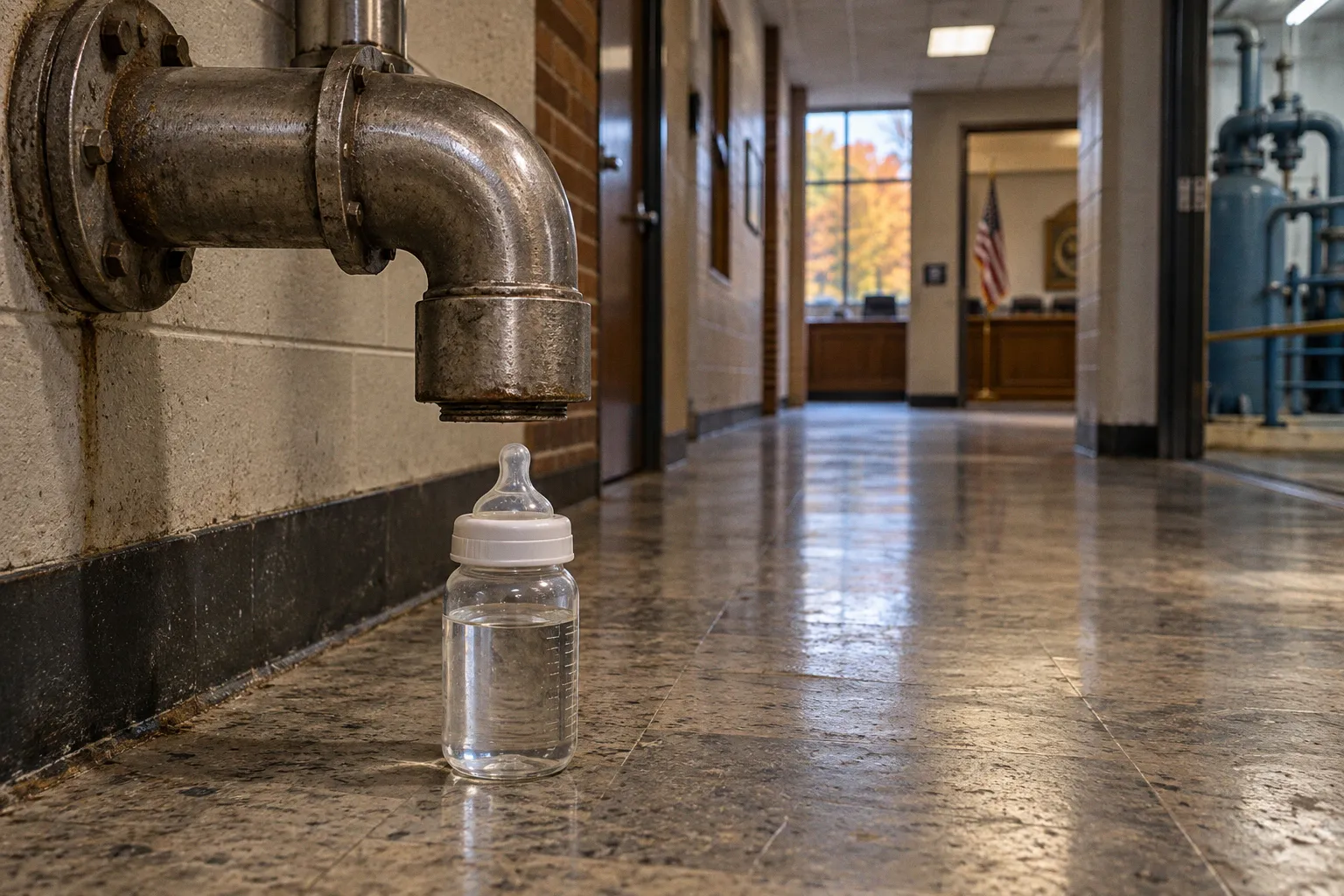
For parents concerned about infant exposure, the discussion also needs precision. An infant who regularly receives formula prepared with fluoridated tap water may consume more fluoride than an infant who is exclusively breastfed, though actual exposure depends on the water and feeding pattern. That is a specific question about ingestion. It should not be blurred with claims about bathing or turned into a health conclusion without evidence.
Mapping the Legal and Jurisdictional Landscape
Before booking a meeting room or printing a petition, find out who owns the decision in your community. There is no single rule across the United States and Canada. Some jurisdictions set fluoridation policy at a state or provincial level; others leave it to a municipality, health authority, or water system. In some places, local officials have discretion. In others, their options are constrained by higher-level law or by the structure of the utility.
Start with your state or provincial public health website. Search for legislation, regulations, and health-code provisions related to community water fluoridation and public water systems. Pay attention to the verbs. A requirement, an authorization, and a recommendation have different consequences. If the law directs a system to fluoridate, local officials may not be able to reverse the policy on their own. If it permits fluoridation or leaves the matter to local authorities, the decision may be closer to home.
Do not rely on a search result or a single line pulled from a statute. Read the surrounding provisions, check whether there have been amendments, and confirm how the rule applies to your particular water system. A city may buy water from a regional supplier and have no direct control over its treatment. A county health department may advise on policy without having the power to set it. Those distinctions can change the campaign’s route.
A few useful first steps:
- Search legislative and regulatory archives for terms such as fluoridation, fluoride, and public water system. Save the relevant provisions and note their dates.
- Contact the state or provincial drinking-water program with a clear question: which body has authority over fluoridation in this system?
- Ask the utility whether it treats the water itself or purchases treated water from another provider.
- Keep a record of what you find, including links, meeting minutes, emails, and the name or office of the person who clarified the jurisdiction.
The first job is to locate the decision, not to assume where it sits.
If the decision belongs at the state or provincial level, that is a change of venue, not necessarily a dead end. It may mean building relationships with legislators or seeking clarification from the relevant agency instead of focusing on a city council vote. If authority is shared, map the sequence: who studies the issue, who recommends a course, and who makes the final decision?
Auditing Local Water Utility Infrastructure and Costs
The legal map tells you who can act. The utility records help establish what is happening now. This part of the work is less visible than a packed hearing, but it gives a campaign something solid to discuss: the treatment process, the source of the water, how the program is managed, and what it costs.
Begin with records already available online. A utility’s annual report, budget, water-quality report, or board minutes may answer some of the basic questions. If key documents are missing, make a focused public-records request. Ask for records rather than explanations where possible. A request for the most recent operating reports and purchasing records is easier to answer than a broad demand for every document connected to fluoride.
Useful records may include:
| Record or detail | What it can clarify | Possible source |
|---|---|---|
| Water-system ownership and service area | Which utility treats the water and which residents it serves | Utility reports, service maps, local government records |
| Fluoridation policy and start date | How the current practice was authorized and when it began | Meeting minutes, utility records, health department |
| Treatment process and operating procedures | How fluoride is added and monitored, if it is added | Utility technical reports, operator or board records |
| Chemical purchasing and cost records | What the system buys and how costs appear in the budget | Procurement records, utility budgets |
| Water-quality reports and monitoring data | What the utility reports about water quality and fluoride levels | Utility website, regulator or drinking-water program |
| Public notices and educational materials | How residents are told about water quality and treatment | Utility communications, public meeting records |
Ask the utility what chemical it uses and how it verifies the product meets applicable requirements. Avoid treating a chemical’s industrial origin as proof that the treated water is unsafe. The relevant questions are about the substance, its specifications, contaminants, handling, dosing, and monitoring in the actual system. A product safety sheet or certificate of analysis can be useful, but it needs interpretation. A list of trace constituents, by itself, does not establish the risk at concentrations found in drinking water.
Cost figures need the same care. Separate the cost of the chemical from equipment, maintenance, testing, staffing, and any upgrades. Ask whether the figure covers one year or a longer period, and whether the utility’s accounting includes shared costs. A single number without that context can be easy to challenge and hard for the public to use.
A concise records request might say that you are a resident seeking documents about the local water-treatment program and list the specific records and date range you need. If the utility says a document is held by another agency, ask which one. Access rules vary, and a public or regulated utility may still have procedures, exemptions, or fees that affect a request. Keep the exchange polite and specific; it is easier to follow up when everyone knows exactly what has been requested.
The Consumer Confidence Report can help establish what a utility reports about drinking-water quality, but it may not answer every question about treatment operations, procurement, or historical policy. Read it alongside utility records and information from the relevant drinking-water regulator. If you compare reported fluoride levels with a public-health recommendation, state what each number represents and where it came from. A recommendation is not the same thing as a measurement, and neither one settles every policy question.
Identifying Decision-Making Bodies and Policy Pathways
Knowing the law and collecting utility records still leave a practical question: where does the decision actually move? In one community, a council may vote after receiving a staff recommendation. In another, a water authority may control treatment, while elected officials appoint its members. A health board may advise without having binding authority. Follow the process from the first discussion to the final decision rather than focusing only on the most visible meeting.
Start with the most recent local policy action. Search meeting minutes, agendas, and board packets for discussion of fluoridation, water treatment, or related public-health policy. Look for the body that initiated the discussion and the body that took formal action. Then check whether a committee, utility staff, or an outside agency prepares recommendations before the final vote.
A workable map of the pathway includes:
1. The body that has legal authority to approve, change, or end the policy.
2. The committee or staff process that develops recommendations.
3. The schedule for hearings, board meetings, and public comment.
4. The rules for written submissions, speaking time, and sign-up deadlines.
5. Any state or provincial limits on local decisions.
6. Whether a referendum or ballot measure is legally available and what procedures it requires.
A clerk or board secretary can often explain how to submit a comment or find a public agenda packet. Ask procedural questions without asking staff to take a position. If the process is unclear, request the relevant bylaw, ordinance, or administrative rule. A campaign that understands procedure is less likely to spend its effort on the wrong body or miss a public-comment deadline.
Ballot measures may be an option in some jurisdictions, but their availability and requirements vary. Do not assume a referendum is possible because another city used one. Check local election rules, the subject matter allowed for initiatives, signature requirements, filing dates, and whether a vote would be advisory or binding. The details belong in the campaign plan before volunteers start collecting signatures.
The final vote may be public, but the policy often takes shape earlier, in staff reports and committee discussions.
Building a Coalition and Mobilizing Community Support
A campaign is stronger when it reflects more than one person’s concerns. That does not mean gathering names as quickly as possible. It means building a group that can listen, check claims, share work, and speak with people who are affected by the decision.
Begin with a listening conversation. Parents may have questions about formula preparation, while other residents may care about utility transparency, public consent, treatment costs, or the role of local government. These concerns can sit in the same coalition without being collapsed into a single claim. Make room for uncertainty and disagreement; people are more likely to stay involved when they are not asked to adopt every argument at the door.
Potential partners might include neighborhood associations, environmental and clean-water groups, parent networks, public-health professionals, and people with experience in local government. Invite them to review the campaign’s goals and sources. If a clinician or water-treatment specialist is willing to contribute, describe their qualifications accurately and do not imply that one professional speaks for an entire field.
A small group can start with a few defined roles:
- One person tracks agendas, rules, and meeting dates.
- One organizes utility records and maintains a source list.
- One coordinates community conversations and responds to new volunteers.
- One prepares public comments and checks that claims are supported.
- One keeps the group’s shared notes and decisions up to date.
Choose a manageable first action, such as attending a utility board meeting, submitting a records request, or hosting a discussion at a library. Agree in advance on what the action is meant to accomplish. A meeting to hear residents’ questions is different from an event designed to recruit volunteers; clear expectations help people decide whether to come.
Coalition-building also requires care around infant health. Formula feeding is a common and necessary way to feed infants, and parents should not be shamed for using tap water or for following medical advice. Families should use safe water and prepare formula according to the product instructions and guidance from their healthcare provider. If the campaign discusses fluoride intake from formula mixed with tap water, explain that exposure depends on the fluoride concentration in the water and the amount consumed. Do not present bathing as an established route of meaningful infant fluoride exposure without reliable evidence, and do not use it as a stand-in for ingestion.
Include residents who have often had less influence over infrastructure decisions, especially communities facing water-system problems or limited access to reliable information. Inclusion should mean shared decision-making, not simply asking people to appear at a meeting after the campaign has already set its message. Ask what questions they want answered, what meeting formats work for them, and what barriers make participation difficult.
Synthesizing Technical Evidence for Public Advocacy
The final task is to turn records and research into material a busy board member or neighbor can understand. The goal is not to flatten complicated evidence into a slogan. It is to make the claim, its limits, and its source visible.
Give each important statement a citation that a reader can check. Separate local facts, such as what a utility reports doing, from broader evidence about health outcomes. Separate an official recommendation from evidence about benefits or risks. If a study concerns a particular age group, exposure level, or outcome, say so. A finding about one population should not quietly become a claim about every infant in every community.
For a public meeting, a short briefing can organize the issue around four questions:
- What is the current local policy, and which body controls it?
- What does the utility report about treatment, monitoring, and cost?
- What does the cited evidence say, and what does it not establish?
- What action is the campaign asking the decision-maker to take?
When discussing infant exposure, distinguish water concentration from total intake. Formula prepared with tap water is an ingestion route; the amount an infant receives depends on the water used and how much formula is consumed. Breast milk, bottled water, and formula preparation practices differ, but a campaign should not infer an individual child’s exposure from a general description. Avoid diagnosing dental or developmental conditions from appearance, and do not imply that a parent can assess neurological risk from a single water report.
Technical language can be translated without turning into certainty. If a study reports an association, call it an association unless the evidence supports a stronger conclusion. If experts disagree about the interpretation, describe the disagreement and cite the sources on both sides. A campaign can argue for a policy change while still being exact about what the research does and does not show. That discipline is not a concession; it makes the public record harder to dismiss.
Before submitting a handout, ask someone outside the research group to read it. Can they tell which claims describe the local system, which refer to broader research, and what action is being requested? Check that every figure has a source and a unit, that the dates and terms are used consistently, and that no sentence turns a possibility into a certainty.
A local fluoridation campaign is built through patient work: locating authority, obtaining records, understanding procedure, making room for affected residents, and presenting evidence honestly. The preparation checklist matters because public decisions reward clarity. A group that knows what it can verify, what it still needs to learn, and where its community can act is better positioned to make a serious case.